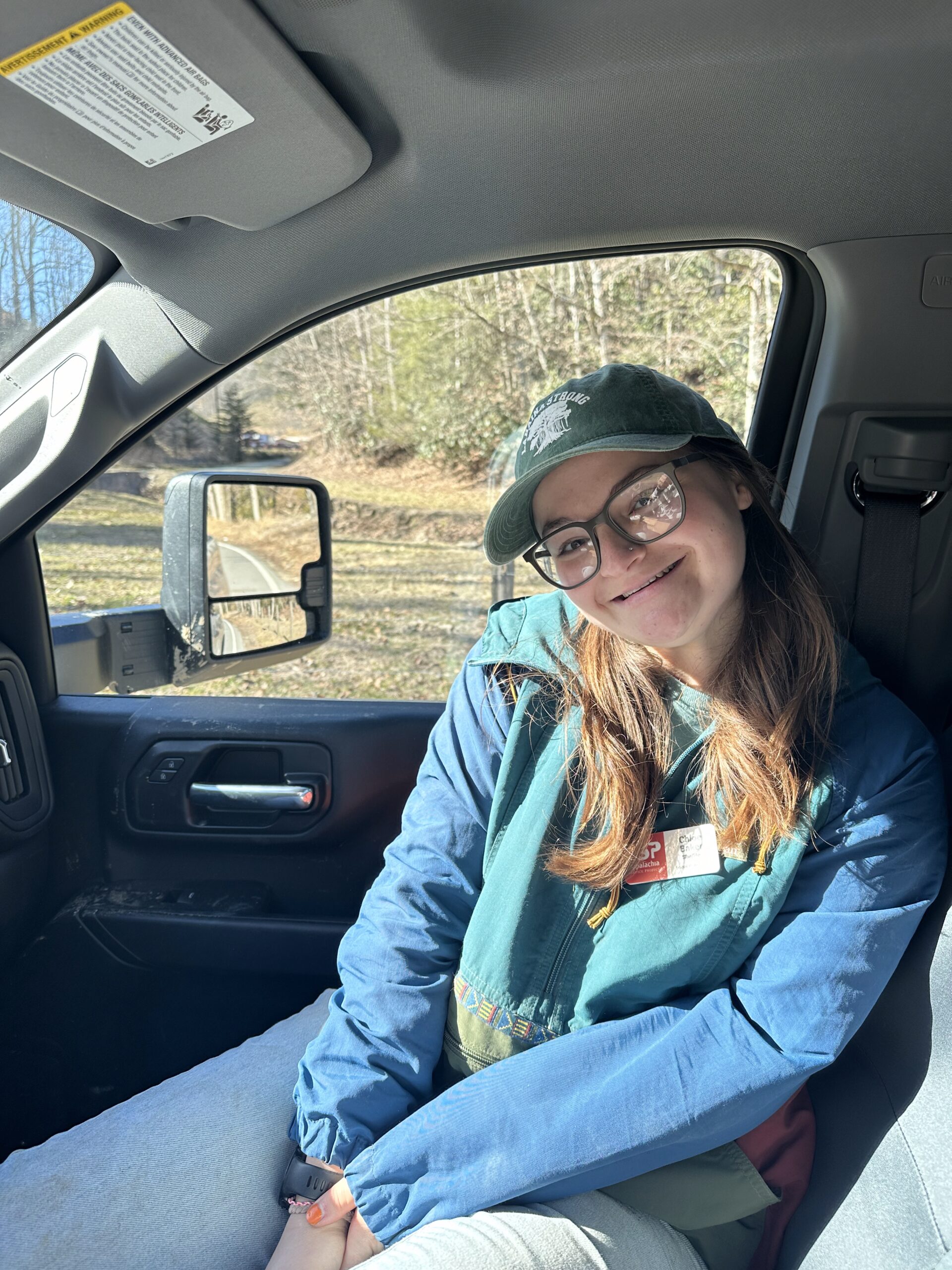
I have begun progressing into my first couple of weeks working alongside ASP and all that entails and within it I have seen the fabrication of a lot of different jobs all colliding into one: social work, construction, management, and one big one that seems to envelop all of these – community leadership and collaboration. On my first day sitting shotgun with Tyler, the head of the disaster recovery team in Western North Carolina, we talked a lot about the expectations of this type of work and while I explained to Tyler the very realness of what it means to be a social worker, he seemed perplexed. “You might just convince me that I’m doing social work out here, then.” And I laughed, but the truth is, Tyler, alongside a lot of others, are doing social work every day, and it hit me that perhaps they didn’t realize it at all.
Social work, as defined by the National Association of Social Workers (NASW), is most often described as “the practical application of applying principles and values to grow an individual, family, or community.” I feel as though most people have a bit of an old description in their head of social workers that media has done no work to dismay. A scary looking person on the other side of the door, usually threatening to take kids away or examine someone’s parole chart, is often the idea I think most people have in their heads when they hear “social worker” and while some of these descriptions are true, and needed in this world, more often than not, social workers are everyday people, who, for lack of better terms, are just doing the gritty work to make sure someone makes it through another day. Now that’s not to say social workers don’t go through a lot of schooling, exams, and supervision to get where they are (i.e. me in the midst of graduate school currently) and don’t deserve the respect for how they got to where they got too, but it does mean that in some ways, social work is something we can all encompass every day, and there are people doing that every day. And that looks a lot like the people of ASP, but that also looks a lot like the people who work at your local grocery store, who run your town’s food pantry, who take care of your electricity, or your neighborhood safety team.
Social work is more a way of life than anything else. You and most likely your neighbor are doing social work almost every day, that is, if you decide to look at it that way. So, how can you make sure you’re doing the kind of social work that is going to aid in someone’s life or another?
By assessing resources, connecting people to places they wouldn’t have any other chance of getting too, or just having a heart to heart with someone about their struggles, can be the kind of social work that ties communities back together once again, especially if it pertains to disaster recovery. I have found most often that people are just looking for someone to listen to them, to be an active participant in their life, a witness to their beautifully broken life.
So, how can you do that today, and perhaps every day? How can you show up as a social worker in your everyday life, for your community, for your people, for yourself?
Chloe B.
Social Work Intern