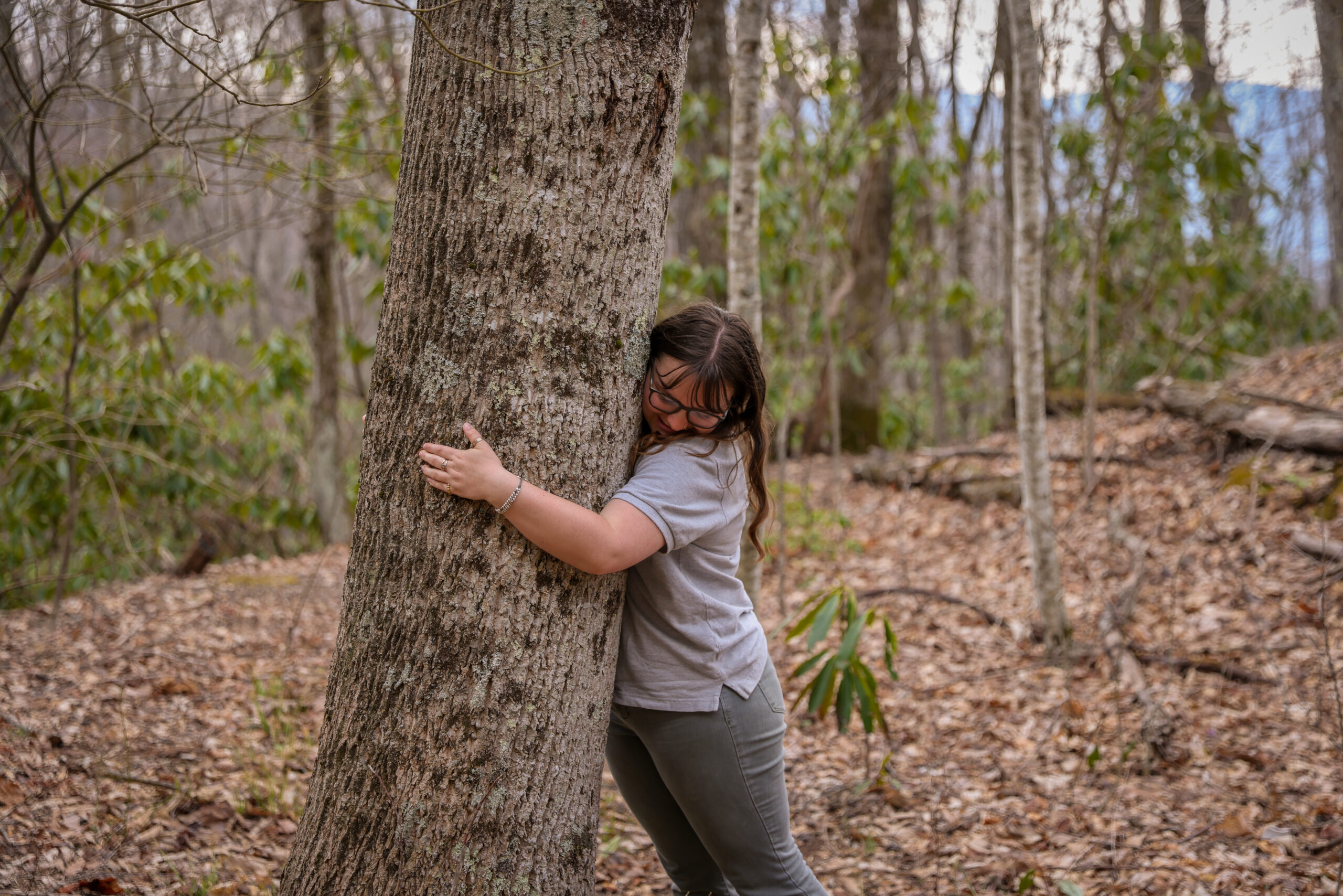
I’m a born and bred tree hugger and I have been ever since my parents first took us to the woods, at the ripe age of six, and they told us to listen closely to what the trees were saying. Ever since I can remember, I’ve loved trees, loved nature, more sometimes than any other matter in this world. Nature doesn’t judge, it doesn’t boast, or protest – it just exists, without the need to perform; an ever-present entity, everywhere all at once. So, when we were visiting a plot of land the other day in Western North Carolina, that had been impacted by the hurricane, it hit a little differently, seeing a small teddy bear cast aside, dirty and soaked, sitting alone in the mud, someone’s entire life laid out in front of us in fragmented pieces. And I think, for someone who has always preached about the need to protect and serve Earth, it hits different when you see the effects of what mother nature can do, when it no longer is serving a healing purpose – but causing the underlying issue for humans: disaster.
Environmental justice is a core principle and ethic outlined in social work, something that I think we often forget exists in our code(s). We have become such a reactive species, instead of, in my opinion, a species that should be focused on mitigation of the issue at hand, especially something as critical as the environment.
How can you serve others, how can you serve humankind if humankind’s world is one of destruction? Or even yet, what if there is no environment – how do you help then?
Appalachia has a long and rich history of environmental injustice, sometimes referred to as, “the sacrifice zone” despite numerous humans still living in the region. It dates back past coal mining and the effects of tying poverty to pollution, all the way back to when Native American tribes owned and operated the land, a mere 10,000 years ago. Several different tribes operated on the land including but not limited to the Powatan, the Delaware, the Shawnee, and the Cherokee tribes. The Indian Removal Act, enacting the Trail of Tears, scarred Appalachia land and the tribes who endured it. However, even after the forced removal, the tribes’ effects on the land forever impacted the way agriculture existed in Appalachia. While these tribes depended on the environment to survive, the environment also depended on them – as Native Americans often emphasize the importance of the environment in their daily lives and cultural practices.
Moving forward today, there are more and more land rights being negotiated and passed back to Native American tribes, but the fight for environmental and human justice continues in Appalachia. Seeing the effects of the land, the land of which I have come to love, being impacted by disaster, reallocates a way of thinking – it makes you process how every single action you take does impact someone, something, or someplace in one way or another. And while some days you may feel insignificant in the vast expanse of it all, you really aren’t.
There’s an old parable about a man on a beach, he is throwing starfish back into the sea, one at a time, and there are hundreds at his feet, all washed up after a storm. A second man passes by and says, “You cannot possibly save them all, why even try?” The first man picks up a starfish, holds it in his hands, and says, “But I’m saving this one…and that makes all the difference for this life right here.”
I was thinking of that parable when I moved that teddy bear over to sit underneath a tree and I took a minute to process, pray, and listen to what the trees were saying. I stood there, sending out my utmost respect to the trees, the land, the mountains — all of which have been here way before I ever came into the picture, and will be here long after I leave.
And I hope in some way or another, I can try to make a difference to it too,
just as it has done for me; for us – time and time again.
Continue reading/education of Native American Cultures in Appalachia:
Chapter 11 Native American Cultures of Appalachia | Accessible Appalachia | OEN Manifold
–
Chloe B.
Social Work Intern